Key takeaways
- The worries are reasonable: losing sight of progress, code held back, scope and price drifting, local requirements missed, support stopping after launch.
- Each one has a structural answer: short cycles with working releases, code and accounts in your name from day one, written scope, and payments tied to accepted milestones.
- Put ownership, acceptance, warranty, confidentiality, support and handover in the contract, and have a lawyer review it.
- Before you sign, open live work yourself, speak to a reference client, meet the people who will build, and start with a small paid first step.
The worry is reasonable
Many Saudi companies hire software teams in Egypt, elsewhere in the region or further away, for capacity, experience or cost. The fears are the same every time: the team goes quiet, the code is held back, the scope and the price keep moving, local requirements are missed, and support stops after launch. None of these is caused by distance. All of them are caused by missing structure, and structure is something you can ask for in writing.
What actually reduces the risk
| The risk | What to put in place |
|---|---|
| You cannot see progress | Short cycles with a working version to review every week or two, and one person accountable for updates. |
| The code is held back | The code in a repository in your name from the first day, and hosting, domain and app store accounts registered to you. |
| Scope and price drift | A written scope after a short discovery phase, and every change quoted and approved before work starts. |
| Payments run ahead of the work | Payments tied to accepted milestones, not to dates on a calendar. |
| Local requirements are missed | Ask for real experience with mada and Apple Pay, Arabic interfaces, and e-invoicing and data rules where they apply. |
| Support stops after launch | A warranty period for defects, then a maintenance agreement with agreed response times. |
| Your information leaks | An NDA before you share details, and access limited to the people who need it. |
For the local requirements, see payment gateways in Saudi Arabia and ERP for SMEs in Saudi Arabia.
Clauses worth having in the contract
- Scope and acceptance: what will be delivered, and how you decide that a milestone is done.
- Milestones and payments: the amount tied to each accepted milestone.
- Ownership: the code written for you is yours; third-party and open-source components keep their own licences, listed for you.
- Delivery: source code, documentation and access handed over at each milestone, not only at the end.
- Warranty: defects in delivered work fixed at no charge for a stated period.
- Confidentiality and data: how your information and your customers’ data are handled.
- Support: what happens after launch, with response times.
- Exit and handover: how another team can take over if you ever need it.
- Governing law and disputes: agree where and how disagreements are settled.
This is a checklist, not legal advice. Have a lawyer review the agreement before you sign it.
Working hours and communication
Egypt and Saudi Arabia are at most an hour apart, so a shared working day is easy to arrange. Agree on the channels you will use, a fixed weekly review of the working version, one point of contact on each side, and whether documents and the product itself will be in Arabic, English or both.
Check before you sign
- 1Open live work yourself: websites you can visit and apps you can download, not only screenshots.
- 2Speak to a reference client, ideally one in your country or your sector.
- 3Read a sample contract and the support terms before negotiating the price.
- 4Meet the people who will actually build your product, not only the sales team.
- 5Start with a paid discovery phase or a small first milestone before committing to the whole build.
Payments and invoices
Agree the currency at the start, usually riyals or US dollars, and how transfers are made. Ask your accountant how VAT applies to services you buy from outside the Kingdom, so the invoices fit your books from the first payment.
From our work
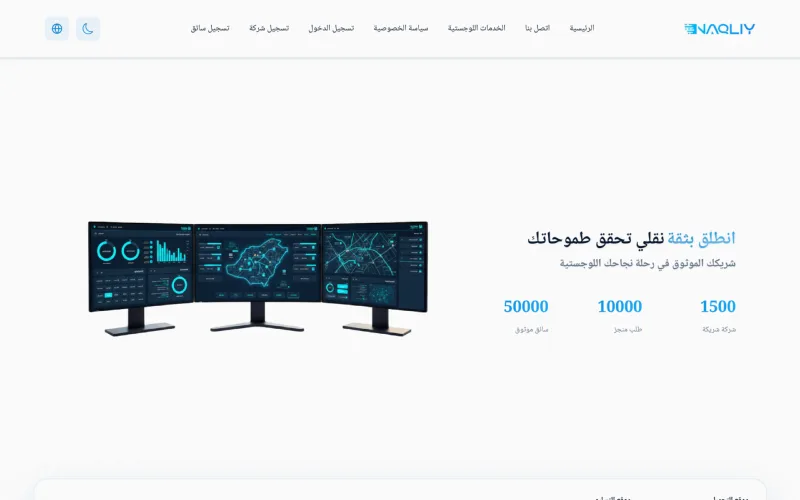
We are a software team based in Cairo working with clients in Saudi Arabia and Egypt. For a logistics provider serving Saudi Arabia and the Gulf we built Naqliy, a platform in Arabic, English and Urdu where companies request transport and drivers take the jobs. What we commit to in writing, from code in your name to the handover list, is on our trust and guarantees page.
Next step
Use the 10 points in how to choose a software development company, pick a contract model with fixed price or time and materials, write down what you need with the software requirements document guide, or contact us to start with a small first step.
Frequently asked questions
Is it safe to hire a software company from outside Saudi Arabia?
It can be, when the structure is right: a written scope, the code and accounts in your name, payments tied to accepted milestones, references you can check and a clear support agreement after launch.
Who owns the code if the team is abroad?
Agree in writing that the code written for you is yours and is delivered to a repository in your name as the work progresses. Third-party and open-source components keep their own licences.
How are payments usually arranged?
In milestones tied to accepted deliverables, in the currency you agree on, often riyals or US dollars. Avoid paying most of the price before you have seen working software.
What about support after launch?
Ask for a warranty period for defects in delivered work, then a maintenance agreement with response times that match how critical the system is to your business.